About
Who We Are
A group of volunteers from across Canada who are concerned about the abuse of rights and freedoms of Canadians because of false or exaggerated narratives driven by foreign interference hysteria, national security overreach, and fear of the “other”.
As a non-partisan organization, we work with other groups that share our concerns about protecting Charter Rights and encouraging the political participation and civic inclusion of all Canadians.
CUAME was founded in 2025 and is registered under the Canada Not-for-Profit Corporations Act. It is run entirely by volunteers.
Backgrounder · Part one
What is modern exclusion?
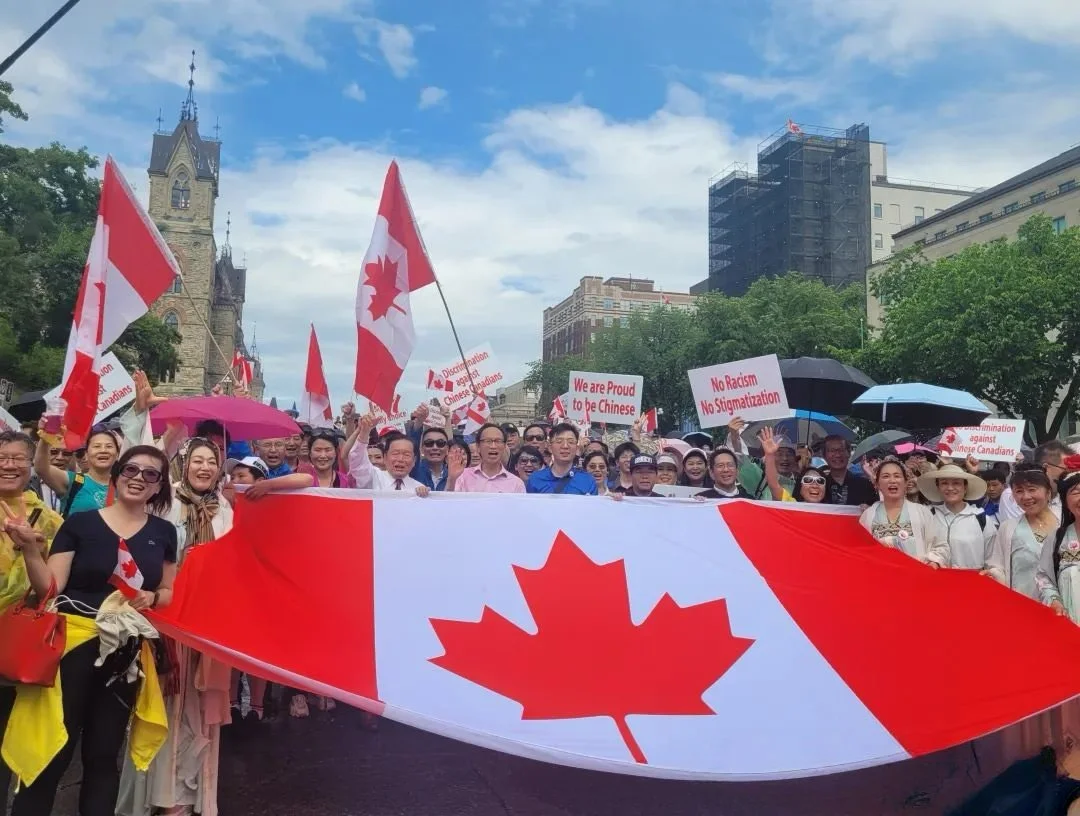
In an age of heightened geopolitical conflict and populist nationalism, many countries have taken a dangerous turn: punishing citizens for not conforming to a rigid idea of the national interest, or for having benign ties with foreign entities. Canadians from all walks of life have been discriminated against and stigmatized. This is modern exclusion.
It is informal, but not harmless
Much of the discrimination is diffuse and difficult to pin down. The consequences are not. People and organizations caught up in accusations of “foreign interference” can face ostracization, stigmatization, and even criminal prosecution.
It reaches every walk of life
Businesspeople, scholars, civil servants, community service workers and more have been affected. Politicians have exacerbated the problem by not challenging spurious or unsubstantiated claims, often propagated in the media by self-interested agents.
It is now written into law
In June 2024 Parliament passed a draconian national security bill creating a new offence of covertly interfering in a political process on behalf of a foreign entity. Anyone deemed “in association with” a foreign entity who does not register could be seen as acting “covertly”. The maximum penalty is life imprisonment.
Backgrounder · Part two
A history of exclusion in Canada
Government-sanctioned exclusion of minorities has been an unfortunate feature of our history. These acts have always been justified on the grounds of racial superiority, national security, public safety, or national interest.
-
Ongoing
First Nations, Métis and Inuit peoples
The first and most prominent examples of Canadian exclusion. Indigenous peoples were in effect excluded from their own lands and way of life through a system of settler colonialism and exploitation. Their struggle for justice and reconciliation continues to this day.
-
From the 1600s
Black Canadians
Black Canadians, who arrived as early as the 17th century, have faced racism, discrimination, segregation, and hate because of the colour of their skin. In the late 19th and early 20th centuries, the Canadian government implemented policies to exclude Black people from immigrating to Canada.
-
Early 1900s
Doukhobors
Doukhobors fleeing Russia faced persecution and stigmatization after arriving in Canada, including the apprehension of children and their placement in institutions.
-
1914
The Komagata Maru
Sikhs fleeing persecution in India arrived in Vancouver aboard the Komagata Maru seeking sanctuary, but were denied entry and eventually deported.
-
First World War
Ukrainian Canadians interned
Ukrainians in Canada were interned because they were considered “enemy aliens” under the War Measures Act.
-
1923–1947
The Chinese Exclusion Act
The word “exclusion” is most closely associated with the Chinese Immigration Act of 1923. After 40 years of a punitive “head tax” failed to stem Chinese immigration, the government of Mackenzie King enacted a law that effectively banned it. The law also required all Chinese in Canada to register with the government and carry documentation, failing which they could face fines, jail, or deportation. It was in effect for 24 years.
-
1933–1945
“None is too many”
Only 5,000 Jewish refugees were allowed to enter Canada during the 12-year period of the German Nazi regime. The Minister in charge of immigration famously said of Jewish immigration that “none is too many”, a view echoed by Prime Minister William Lyon Mackenzie King. In 1939, nine hundred Jewish refugees aboard the MS St. Louis were denied entry into Canada. Many returned to Europe and perished in the Holocaust.
-
Second World War
Italian and Japanese Canadians interned
31,000 Italian Canadians were labelled “enemy aliens”, with over 700 arrested and sent to internment camps. Japanese Canadians fared even worse: more than 20,000 were dispossessed, removed from their homes, and sent to internment camps.
-
2001 onward
Muslim and Palestinian Canadians
Especially in the wake of the American response to the 9/11 attacks, Muslims have been subject to excessive security screening, hate speech, physical abuse, discrimination, and stigmatization in their professional and personal lives. Islamophobia persists to this day, with a particular variant affecting Palestinian Canadians, who have been unfairly tagged as rioters and national security threats because of their support for a just settlement to the conflict in Gaza and the West Bank.
Backgrounder · Part three
Modern exclusion today
Immigrant “exclusion” is a blemish on Canadian history and continues to be a problem today. While it is unlikely that the Canadian government will return to a blanket ban on immigration of a particular group, such as in the Chinese Exclusion Act, the same types of racist, xenophobic, and national security arguments are being used to justify modern forms of exclusion.
New forms of exclusion directed at Chinese Canadians and Canadians with links to the People’s Republic of China (PRC) are becoming accepted as social and political norms. This modern “Sinophobia” does not target all Chinese in Canada but seeks to categorize Chinese Canadians into those who are acceptable and those who aren’t. In this sense, it is not only a modern version of “exclusion” but also a new kind of racism – one that is both more subtle and more dangerous.
The weaponization of foreign interference fears has fostered suspicions about Chinese Canadians and others based on little more than rumours, innuendo, and prejudice. The presumption of disloyalty among Canadians who are involved in improving relations with the PRC, or who simply do not accept prevailing narratives about a “China Threat”, has resulted in stigmatization, with adverse consequences for their personal lives and careers.
External pressure, groupthink, and domestic politics have entrenched some of these prejudices into policy and law, such as Bill C-70. Police and national security and intelligence agencies, acting on cues from the political class and on their own biases, are suppressing the basic rights and freedoms of Canadians on the grounds of national security. It is a malaise that affects many visible minority groups, but Chinese Canadians and Canadians with ties to the PRC face a unique set of challenges today and in the foreseeable future because of the geopolitical conflict between the United States and China.
While contemporary geopolitics has made Canadians with ties to the PRC especially vulnerable to exclusion today, the problem could in the future apply to other nationality or ethnic groups due to shifts in international relations and power politics. The Canadian Charter of Rights and Freedoms should not be compromised because of shifting winds – whichever way the winds blow.
L’« exclusion » des immigrant.es est une tache sur l’histoire du Canada et demeure un problème aujourd’hui. Si un retour à une interdiction totale d’immigrer pour un groupe spécifique semble improbable, les mêmes arguments racistes, xénophobes ou liés à la sécurité nationale sont invoqués pour justifier des formes modernes d’exclusion.
De nouvelles formes d’exclusion visant les Canadien.nes d’origine chinoise et ceux et celles ayant des liens avec la République populaire de Chine (RPC) sont désormais admises comme normes sociales et politiques. Cette « sinophobie » moderne ne vise pas tous les Chinois.es du Canada, mais cherche à diviser entre ceux considérés comme « acceptables » et ceux qui ne le sont pas. C’est à la fois une version contemporaine de l’exclusion et un nouveau type de racisme, plus subtil et plus dangereux.
L’exploitation de la peur de l’ingérence étrangère a alimenté les soupçons à l’égard de Canadien.nes sur la base de simples rumeurs et préjugés. La présomption de déloyauté envers ceux et celles qui travaillent à améliorer les relations avec la RPC ou qui refusent la vision dominante d’une « menace chinoise » a conduit à leur stigmatisation, avec des conséquences néfastes sur leur vie et leur carrière.
Pressions extérieures, pensée de groupe et politique intérieure ont ancré certains de ces préjugés dans les lois, comme le projet de loi C-70. Les forces policières, ainsi que les agences de renseignement et de sécurité nationale, agissant sous l’influence de la classe politique et de leurs propres biais, répriment les droits et libertés fondamentaux au nom de la sécurité nationale. Ce phénomène touche de nombreuses minorités visibles, mais les Canadien.nes d’origine chinoise ou liés à la RPC affrontent aujourd’hui un ensemble unique de défis en raison du conflit géopolitique entre les États-Unis et la Chine.
Si la géopolitique actuelle rend les Canadien.nes et Québécois.es liés à la RPC particulièrement vulnérables, ce problème pourrait, à l’avenir, viser d’autres groupes nationaux ou ethniques selon l’évolution des relations internationales. La Charte canadienne des droits et libertés ne doit pas être compromise par des changements d’humeur géopolitique, peu importe leur direction.
“移民排斥”是加拿大历史上的一大污点,并且至今仍是持续存在的问题。虽然加拿大政府不太可能回到类似《排华法案》那样对特定群体实施全面移民禁令的时代,但同样类型的种族主义、仇外情绪,以及以国家安全为由的论调,正被用来为当代形式的排斥辩护。
针对华裔加拿大人以及与中华人民共和国有联系的加拿大人的新型排斥,正逐渐被社会与政治视为“常态”。这种当代的“仇华情绪”并非针对所有在加华人,而是试图将华裔加拿大人划分为“可接受的”和“不可接受的”两类。从这个意义上说,它不仅是“排斥”的现代版本,更是一种新的种族主义:更隐蔽,也更危险。
将“外国干预”恐惧武器化,助长了对华裔加拿大人及其他群体的怀疑,而这种怀疑往往仅仅基于谣言、影射与偏见。对那些致力于改善对华关系,或仅仅不认同主流“中国威胁”叙事的加拿大人,社会普遍预设其不忠,这种标签化使他们在个人生活与职业发展中遭受不利影响。
在外部压力、集体思维与国内政治的共同作用下,这些偏见已被固化为实际政策与法律,例如 C-70 号法案。警方、国家安全部门与情报机构,在政界指令和自身偏见的推动下,正以“国家安全”为名压制加拿大人的基本权利与自由。这一病症影响着许多少数族裔群体,而在当前中美地缘政治冲突的背景下,华裔加拿大人及与中国有联系的加拿大人,在现在与可预见的未来正面临一系列独特而严峻的挑战。
当下的国际地缘政治使得与中国大陆有联系的加拿大人尤其容易遭受排斥,但这一问题在未来也可能因国际关系与权力政治的变化而波及其他国家或族裔群体。无论风向如何变化,加拿大《权利与自由宪章》都不应因此受到削弱或妥协。
Common questions
Frequently asked questions
Modern exclusion is discrimination against Canadians that is justified by foreign interference hysteria, national security overreach, or fear of the “other” rather than by evidence. Unlike historical exclusion laws, it is usually informal and diffuse (expressed through suspicion, stigma, lost funding, denied security clearances and reputational harm), but its consequences are serious, and since Bill C-70 some of it is written into criminal law.
L’exclusion moderne est une discrimination envers des Canadien.nes justifiée par l’hystérie de l’ingérence étrangère, les excès en matière de sécurité nationale ou la peur de « l’autre » plutôt que par des preuves. Contrairement aux lois d’exclusion historiques, elle est généralement informelle et diffuse (soupçons, stigmatisation, pertes de financement, refus d’habilitations de sécurité, atteintes à la réputation), mais ses conséquences sont graves et, depuis le projet de loi C-70, une partie en est inscrite dans le droit criminel.
“现代排斥”指的是以外国干预恐慌、国家安全过度扩张或对“他者”的恐惧(而非以证据)为由,对加拿大人施加的歧视。与历史上的排斥法不同,它通常是非正式且弥散的,体现为猜疑、污名、资金流失、安全审查被拒与声誉受损;但其后果十分严重,而自 C-70 号法案通过以来,其中一部分已被写入刑法。
Canadians United Against Modern Exclusion (CUAME) is a national volunteer network founded in 2025 and registered under the Canada Not-for-Profit Corporations Act. It documents and challenges modern exclusion, defends the rights of targeted communities, educates the public, and advocates for inclusive, evidence-based policy.
Canadiens unis contre l’exclusion moderne (CUAME) est un réseau national de bénévoles fondé en 2025 et inscrit en vertu de la Loi canadienne sur les organisations à but non lucratif. L’organisme documente et dénonce l’exclusion moderne, défend les droits des communautés ciblées, sensibilise le public et plaide pour des politiques inclusives et fondées sur des faits.
加拿大反歧视与反排外联盟(CUAME)是一个成立于 2025 年的全国性志愿者网络,依据《加拿大非营利公司法》注册。它记录并挑战现代排斥现象,捍卫受影响群体的权利,开展公众教育,并倡导包容、基于证据的公共政策。
No. CUAME is non-partisan and independent. It is run by volunteers from across Canada and funded by donations. It works with other groups that share its concerns about protecting Charter rights and encouraging the civic inclusion and political participation of all Canadians.
Non. CUAME est non partisan et indépendant. L’organisme est dirigé par des bénévoles de partout au Canada et financé par des dons. Il travaille avec d’autres groupes qui partagent ses préoccupations quant à la protection des droits garantis par la Charte et à la promotion de l’inclusion civique et de la participation politique de tous les Canadien.nes.
否。CUAME 是非党派、独立的组织,由来自加拿大各地的志愿者运作,依靠捐款维持。它与其他关注《宪章》权利保护、支持全体加拿大人公民融入与政治参与的团体合作。
Bill C-70 is the national security bill passed by the Parliament of Canada in June 2024. It creates a new offence of interfering in a political process on behalf of a foreign entity. Doing so is not itself illegal: doing so “covertly” is. Anyone deemed to be “in association with” a foreign entity who does not formally register could be seen as acting covertly and charged, and the maximum penalty is life imprisonment.
Le projet de loi C-70 est la loi sur la sécurité nationale adoptée par le Parlement du Canada en juin 2024. Elle crée une nouvelle infraction d’ingérence dans un processus politique pour le compte d’une entité étrangère. Participer à un tel processus n’est pas illégal en soi : le faire « de manière clandestine » l’est. Toute personne jugée « en association avec » une entité étrangère et qui ne s’enregistre pas formellement pourrait être considérée comme agissant clandestinement et poursuivie, l’infraction étant passible de la prison à perpétuité.
C-70 号法案是加拿大国会于 2024 年 6 月通过的国家安全法案。它设立了“代表外国实体干预政治程序”这一新罪名。参与政治程序本身并不违法,但若被认定为“秘密进行”则构成犯罪。任何被认定与外国实体“有关联”却未正式登记者,都可能被视为秘密行事并遭起诉,最高刑罚为终身监禁。
The Foreign Influence Transparency and Accountability Act (FITAA) establishes a public registry for arrangements with foreign principals that seek to influence Canadian political or governmental processes. It comes into force on 4 August 2026. CUAME is concerned about the potential for discrimination and stigmatization arising from overly broad definitions of foreign influence, and has made a formal submission on the draft regulations.
La Loi sur la transparence et la responsabilité en matière d’influence étrangère (LTIEA) établit un registre public des ententes conclues avec des commettants étrangers visant à influencer les processus politiques ou gouvernementaux canadiens. Elle entre en vigueur le 4 août 2026. CUAME s’inquiète du risque de discrimination et de stigmatisation découlant de définitions trop larges de l’influence étrangère et a déposé un mémoire officiel sur le projet de règlement.
《外国影响力透明与问责法》(FITAA)设立了一个公开登记册,用于登记与外国委托方之间旨在影响加拿大政治或政府程序的安排,将于 2026 年 8 月 4 日生效。CUAME 关注“外国影响力”定义过于宽泛可能带来的歧视与污名化风险,并已就规章草案提交正式意见书。
Canadians from all walks of life: businesspeople, scholars, civil servants, community service workers and elected officials. Chinese Canadians and Canadians with ties to the People’s Republic of China face a particular set of challenges because of the geopolitical conflict between the United States and China, but the same logic has been applied to Muslim, Palestinian, Buddhist and other communities, and could apply to any group as international relations shift.
Des Canadien.nes de tous les milieux : entrepreneur.es, universitaires, fonctionnaires, travailleur.euses communautaires et élu.es. Les Canadien.nes d’origine chinoise et ceux ayant des liens avec la République populaire de Chine font face à des défis particuliers en raison du conflit géopolitique entre les États-Unis et la Chine, mais la même logique a été appliquée aux communautés musulmanes, palestiniennes, bouddhistes et à d’autres, et pourrait viser n’importe quel groupe au gré des relations internationales.
来自各行各业的加拿大人:商界人士、学者、公务员、社区服务工作者与民选官员。由于中美地缘政治冲突,华裔加拿大人以及与中华人民共和国有联系的加拿大人面临尤为严峻的挑战;但同样的逻辑也曾用于穆斯林、巴勒斯坦裔、佛教等社群,并可能随着国际关系变化波及任何群体。
Stay informed
Sign up to hear from us
Occasional updates on our case studies, media statements and campaigns.
We will never share your address.